
Rulership
Rulership shows the natural connection between a planet and a sign. It has multiple functions.
- It shows how well equipped a planet is to display its natural topics and themes depending on the sign it is located in.
- It establishes a link between different topics (planets).
- It establishes a link between different areas of life (houses)
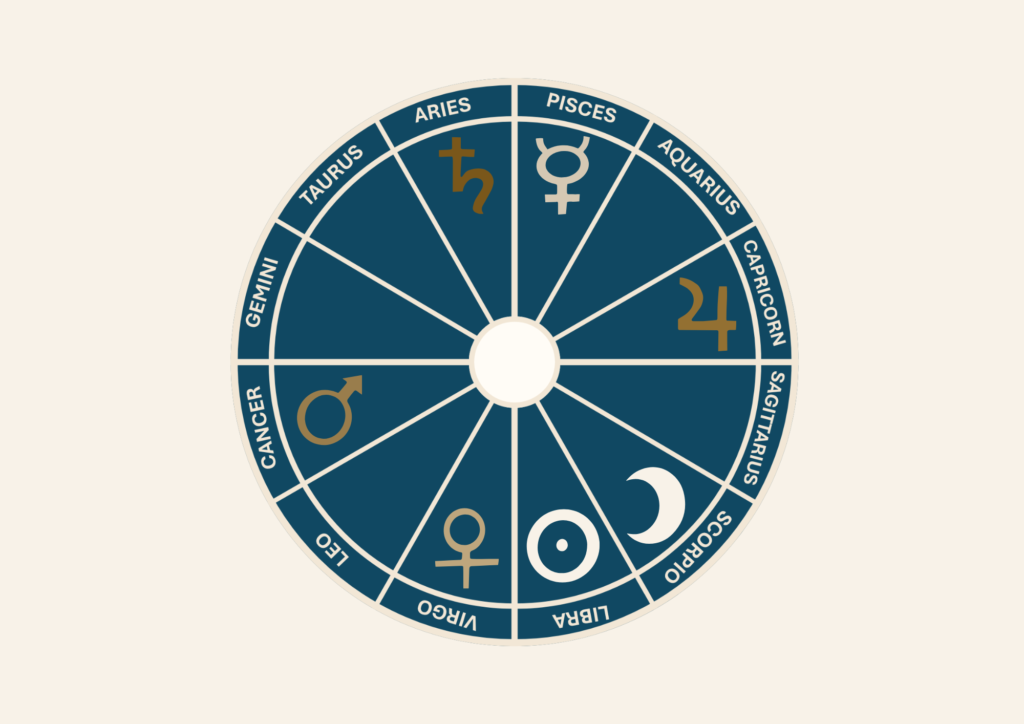
There are four types of rulership called domicile, exaltation, detriment, and fall/depression. They can be explained with the guest-host metaphor in which one planet, the domicile planet, is the host and the other planets are the guests of a certain sign.
When a planet is not in their own domicile, it establishes a connection with the visiting and the host planet, the topics of both planets are in some way tied together and responsible for each other. Similarily, the houses occupied by such two planets are also connected, in this case two life area’s are connected.
The Domicile
Planetary Home
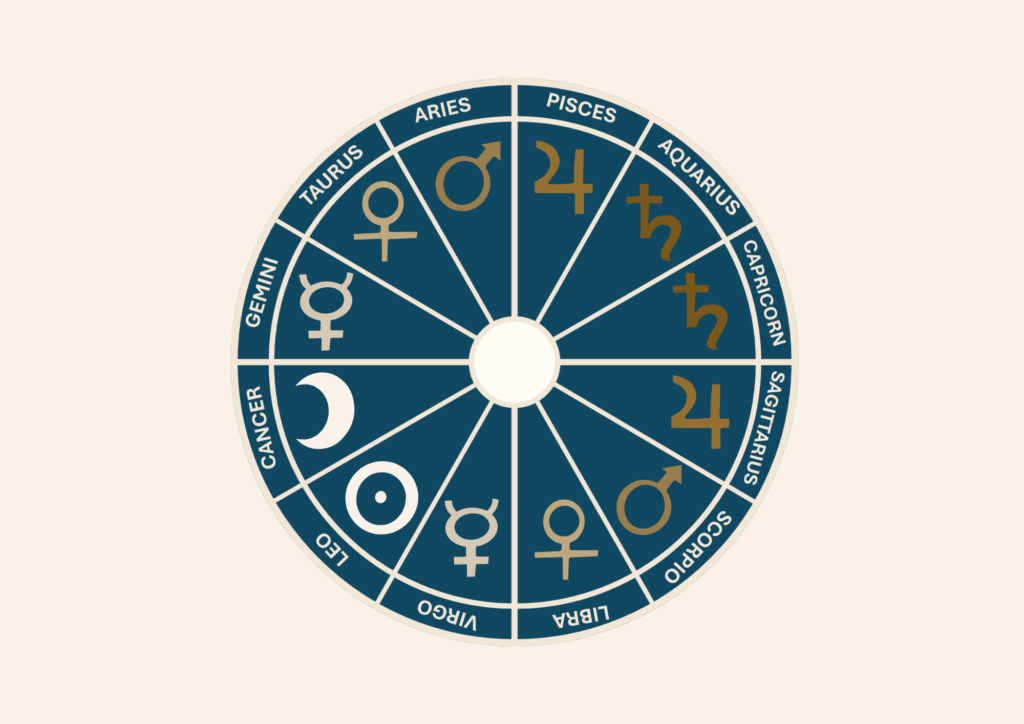
The domicile placement of a planet shows which planet belongs to which sign; it is the sign’s home. The planet in turn is the owner of that sign. They belong together because the sign is best suited for the planet to fulfill its themes and topics, in its domicile the planet has everything it needs. In other words, the planet’s significations match the signification’s of the sign(s). The domicile placements are the following:
Sun – Leo
Moon – Cancer
Mercury – Gemini & Virgo
Venus – Taurus & Libra
Mars – Aries & Scorpio
Jupiter – Sagittarius & Pisces
Saturn – Capricorn & Aquarius
Any other planet which is not the signs owner is considered a visitor in that sign while the sign’s owner is the visitor’s host; he is in charge of taking care of the visiting planets.
The Detriment
Planetary Exile
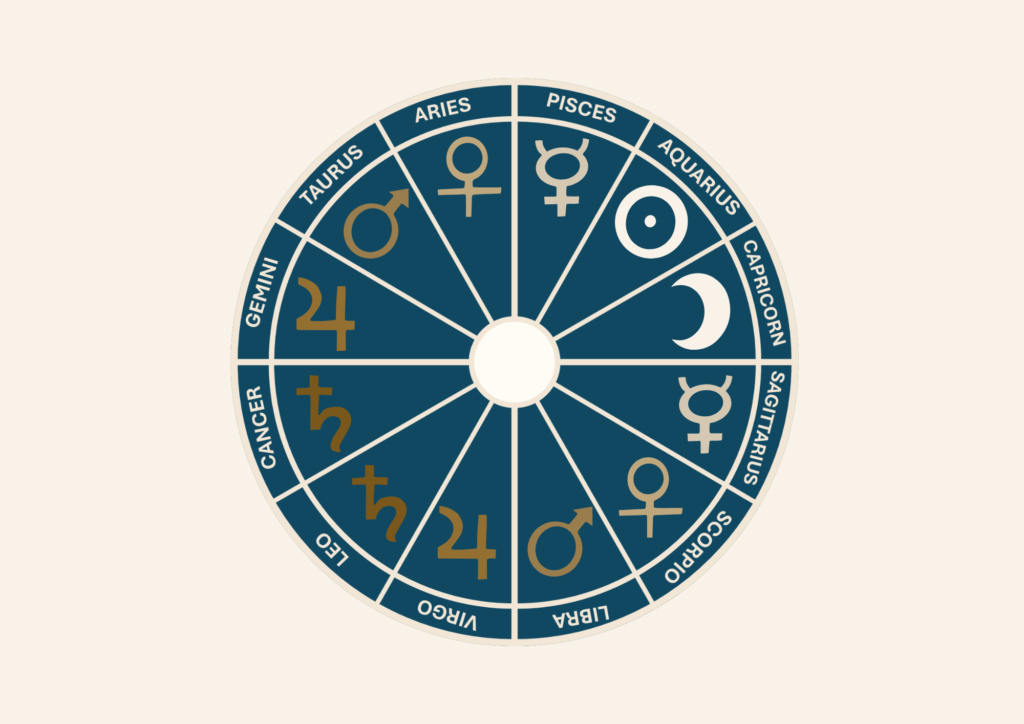
The detriment placement is the opposite of the domicile placement in location within the zodiac wheel as well as in meaning. Here, a planet finds itself in a state of exile, of not being at home, even worse, of being in a place where it has no access to the resources it needs and the resources it does get access to are ill suited to bring about it’s themes and topics. There is a sense of struggle accompanied with the detriment placement, of making do with the meager resources one has and trying to make the most out of it. This placement requires creativity to work, a new way of utilizing the tools one has been given. The detriment placements are the following:
Sun – Aquarius
Moon – Capricorn
Mercury – Sagittarius & Pisces
Venus – Aries & Scorpio
Mars – Taurus & Libra
Jupiter – Gemini & Virgo
Saturn – Cancer & Leo
The Exaltation
Planetary Sanctum
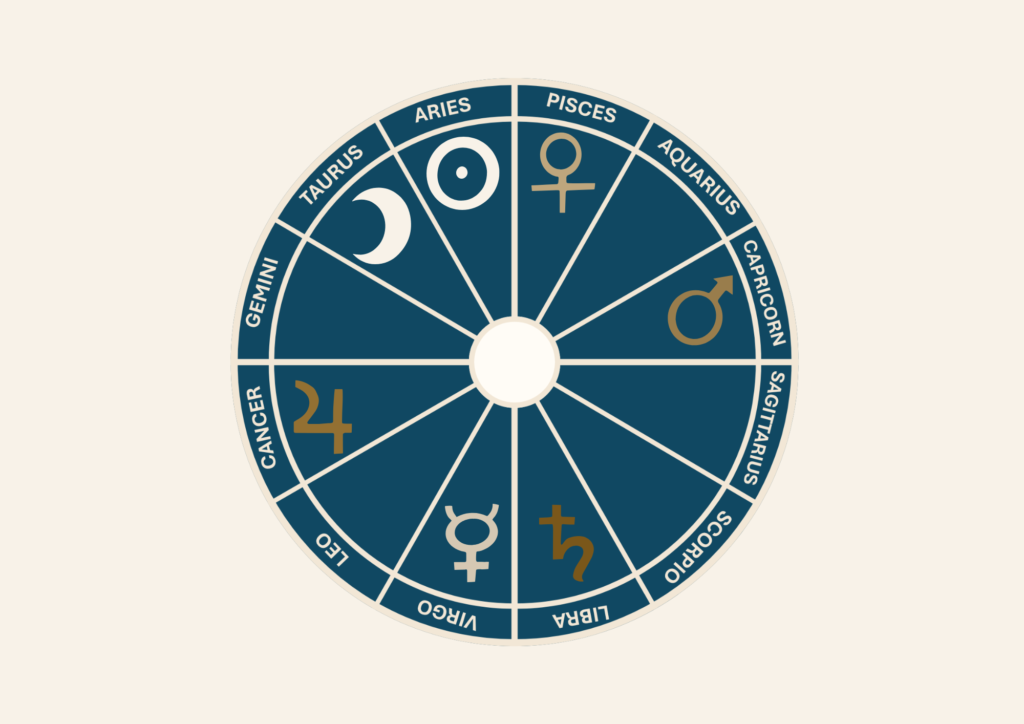
The exaltation placement is the place of honor of a planet, it is their sanctum, that special place where they are elevated and treated like royalty because their qualties are revered. In this sign a planet’s topics and themes are held in high esteem. The exaltation placements are the following:
Sun – Aries
Moon – Taurus
Mercury – Virgo (Modern: Aquarius)
Venus – Pisces
Mars – Capricorn
Jupiter – Cancer
Saturn – Libra
The Fall
Planetary Abyss
Lasty, the fall placement, also called depression is the opposite of the exlatation placement in location within the zodiac wheel as well as in meaning. In this sign a planet’s topics and themes are shunned, even condemned. While the exaltation is an honorary placement that elevates a planet into holiness, the fall plunges a planet into its darkest abyss, a scary place where it would never want to be because it is not welcome here. This is an even more difficult placement that the detriment. The detriment doesn’t have the resources the planet requires, but in the planets fall the environment seems actively hostile toward the plant’s themes and topics, it tries to break them down. The fall placements are the following:
Sun – Libra
Moon – Scorpio
Mercury – Pisces (Modern: Leo)
Venus – Virgo
Mars – Cancer
Jupiter – Capricorn
Saturn – Aries
Planets in Detriment or Fall: Am I Doomed?
If you have planets in detriment or fall, you might be wondering if you are doomed for eternity. And the answer is: It’s complicated.
Similarily to concepts like benefic and malefic planets or good and bad houses, the detriment and fall positions being difficult is archetypally correct but practically more nuanced. Yes, a planet in detriment doesn’t have the right resources at hand, but creativity can get you a long way in working with it. Instead of doing it the regular or most efficient way, you must work with your materials a little bit differently. And yes, it might feel like everyone is out to get you with a fall placement, but adversity breeds strength, you will learn to make it work, even if it requires more effort than other placements.
More importantly, a planet in a natal chart never works in isolation and an ill-placed planet can be helped by other factors in the natal chart just as much as a well-placed planet can be hindered by its interpaly with other planets. In practice, saying a planet is well off or doomed is never that simple, especially when there are factors beside the natal chart such as progressions or transits. The natal chart signature remains, but it will unfold in many ways during one’s lifetime, sometimes more positively and sometimes more negatively.
Lastly, just because archetypally a planet is considered ill-placed does not mean you don’t know how to handle it positively. Everyone has just one natal chart and going through life learns to handle it. Yes, a planet in detriment or fall might be difficult, but, working with the energy long enough, you get used to it, sometimes so much so that having the archetypally more easy placement might feel quite strange, maybe easier, but strange nonetheless. A little bit like someone who has worked hard all their life and has more difficulty relaxing than working, even though the latter generally sounds more pleasant.
So no, you are not doomed, you are challenged to make the best out of something difficult.