The Four Acts of Planetary Cycles
Astrology is not merely about the natal chart, but about the movement of the planets across the zodiac in real time. This is called transits. Transits can be looked at it two different ways:
- The movement of one planet across the zodiac.
- The movement of two planets in relationship to each other.
Here I want to take a loot at the planetary cycles forming between two different planets and show how the four-act storytelling structure can enhance our understanding of these tranists.
Cycle Types
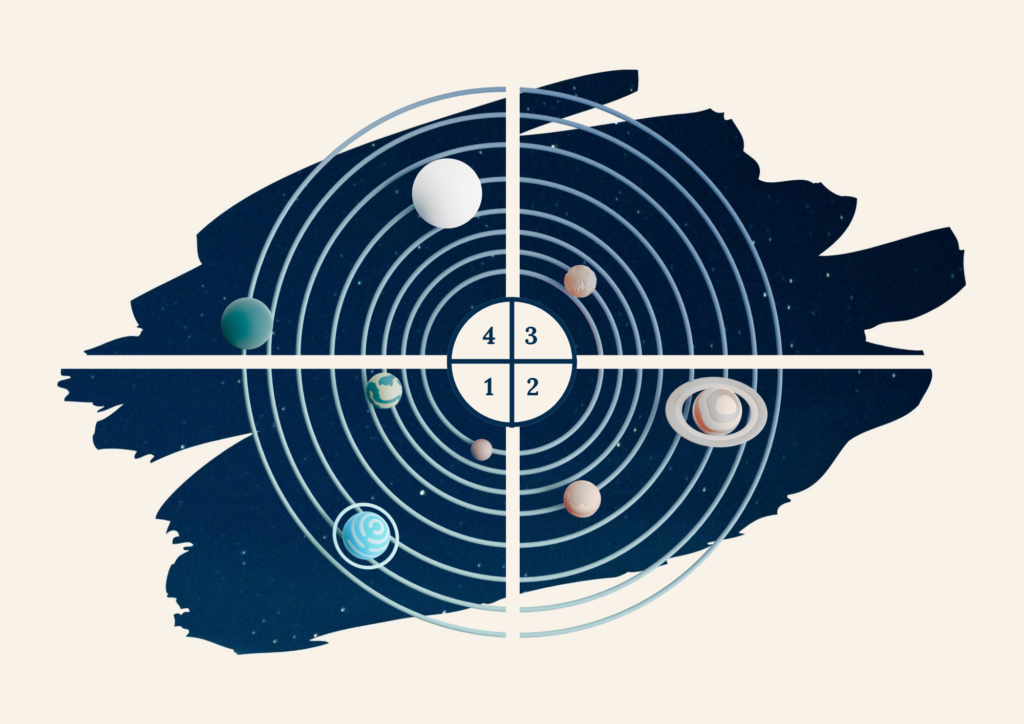
I like to divide planetary cycles into three types which are based on the speed of the planets. A planet can be either fast-moving or slow-moving and depending on whether you pair two slow-moving, two fast-moving or one slow-moving and one fast-moving planet with each other you get different types of cycles.
Slow Cycles
A slow cycle happens between two of the slow-moving planets-Jupiter, Saturn, Uranus, Neptune, and Pluto. These cycles are rare and show the big events that are unfolding over many years.
The slowest of these cycle happens between Neptune and Pluto and lasts roughly 500 years.
The fastest of these cycles happens between Jupiter and Saturn and last 20 years.
Intermediary Cycles
The intermediary cycles happen between a fast-moving and a slow-moving planet. Here, the fast-moving planet activates the slow-moving planet and the slow-moving planet is the focal point of the fast-moving planet.
If Mars is the activating planet, the cylce will last about two years.
If Mercury, Venus or the Sun is the activating planet, the cylce will last about one years.
If the Moon is the activating planet, the cylce will last about a month.
Fast Cycles
A fast cycle happens between two of the fast-moving planets-Mercury, Venus, Mars, as well as the Sun and the Moon. These cycles happen very often and show the ebb and flow of mundane life.
The slowest of these cycles happens between Mars and the Sun, Mercury or Venus, and lasts about two years with varying degrees of consis-tency.
The fastest of these cycles happens between the Moon and any of the other planets and last about a month.
Following any of these cycles can be rewarding and depends on what topics and themes you want to look at, but the intermediary cycles between a fast-moving and slow-moving planets are nice to follow for personal development, because they aren’t as hard to grasp as the slow cycles, which often exceed a human lifespan, but also not as fleeting and mundane as the fast cycles. They are the nice inbetween stage from which we can gauge the impact of the slow-moving planets in a comprehensible timespan of about one or two years. For this, the Sun, Mercury, Venus and Mars activations are the most telling, wheras the Moon is so fleeting it becomes strenuous to follow again.
As a little side note: Each slow and fast cycle also consist of an activating planet and a focal-point planet. The focal planet is always the slower-moving planet while the faster moving planet is the activating planet.
Four-Act Cycle Structure
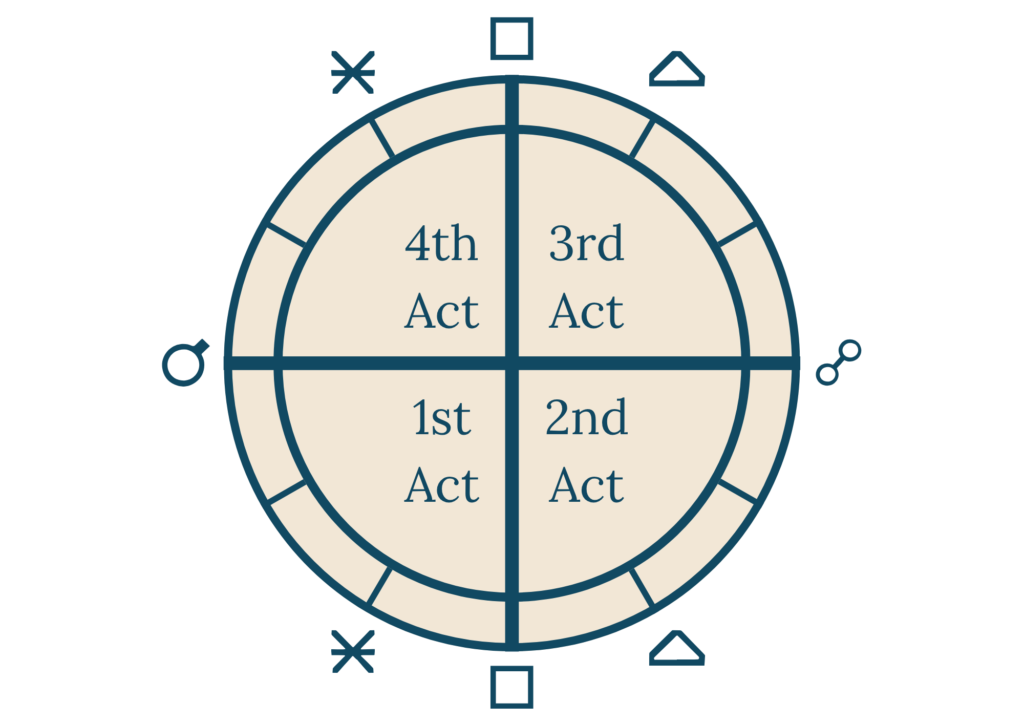
Most of these cycles can be divided neatly into four acts. This Four Act Structure is based on the division of any cycle by the conjunction, opposition and two sqaure points. Because they cycles between the Sun, Mercury and Venus never reach all aspects it isn’t as easily applicable to a cycle between them.
First Act
Growing Into the Cycle
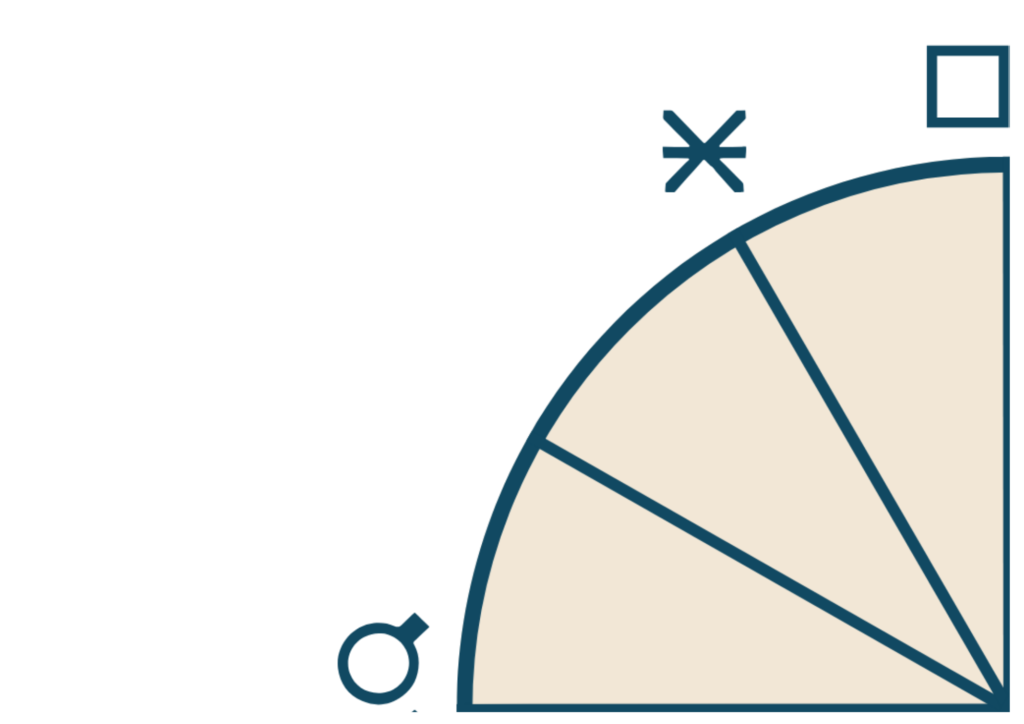
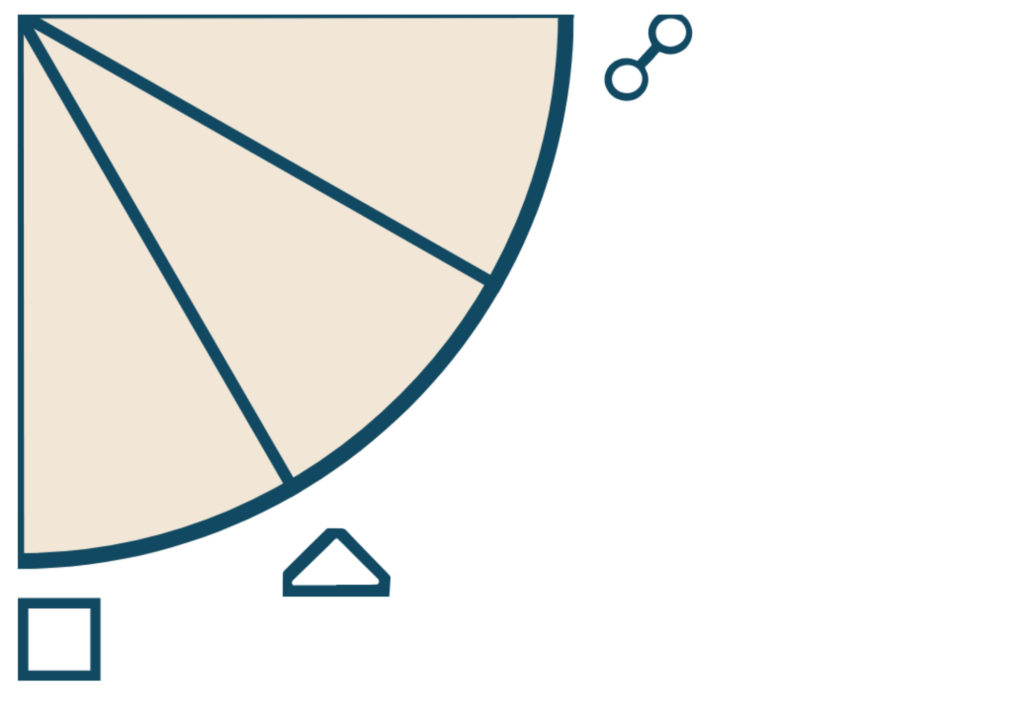
The first act happens from the conjunction to the first square, the waxing square, and contains the waxing sextile.
Like the inciting incident in a story, which disrupts the ordinary world of the hero and kicks off the hero’s journey, the conjunction starts a new cycle between two planets. Like the hero, who can not yet foresee all the changes that are going to take place or the consequences of the inciting incidents disruptive nature, the conjunction often happens without being noticed or without us being able to understand it properly.
From the conjunction onward the hero starts his upward journey toward the waxing square. He will encounter first moments of learning about the new world he is transitioning into, aka the new cycle that has started, as he moves past the waxing sextile and must make a final decision about whether or not he wants to enter the new adventure world of the second act at the waxing square point. The waxing square is a point of no return for the hero, after this he cannot go back to the way things were, this is similar for the square, as it creates a situation where we must choose between different options and our deicsion shows us how we want to engage with the cycle.
Second Act
Growing Toward Success
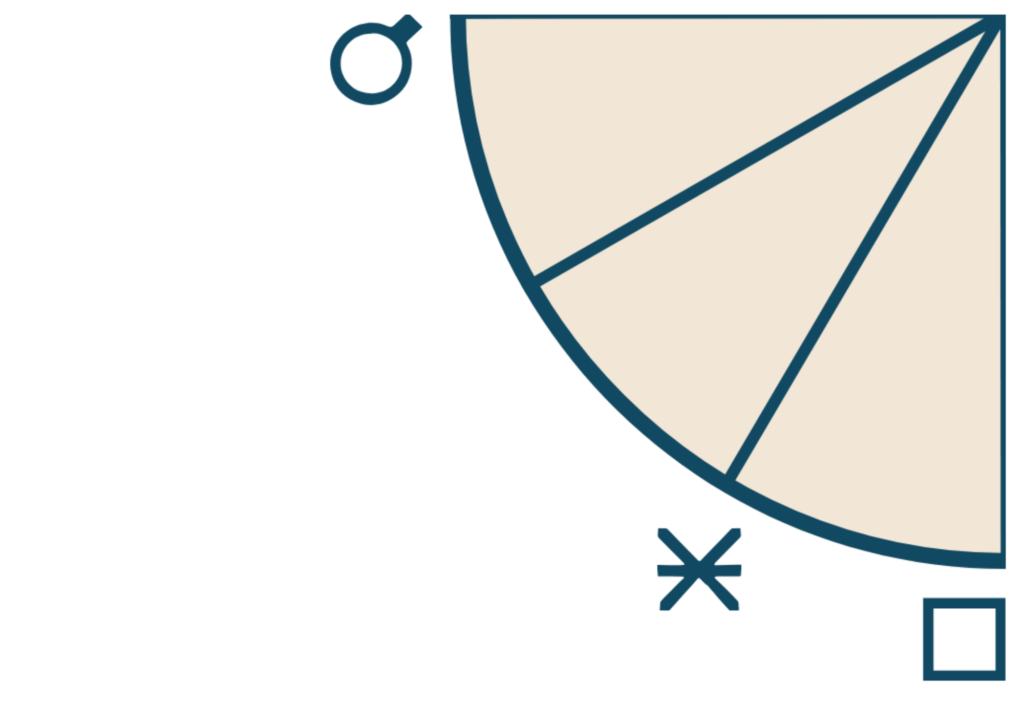
The second act happens from the waxing square to the opposition and contains the waxing trine.
At the end of the first and the beginning of the second act, which is the waxing sqaure point, we are called to make a decision about how we want to move forward, this is the threshold that ushers a hero into the new adventure world and us into the next act of the cycle. The hero is now fully aware of the changes taking place, that he cannot simply return to the way things were. He knows the stakes, embraces them even, as he ventures further upward toward the opposition from which he promises himself success.
On his upward journey he encounters first moments of triumph at the waxing trine point, hints of what may be received fully at the oppositon. In storytelling this comes close to the fun and games section, where the hero plays within the new adventure world and learns to express himself in a new way. Similarily, the topics connected to this astrological cycle come about with much ease now.
As with every story, things don’t stay easy all the time and after the triumphs of the waxing trine, the hero encoutners a period of grind, the hard work of making it to the top of success, which in astrological terms is the opposition, the point of fruition of any cycle. But the opposition isn’t where the story stops, nor where the cycle ends, it is the midpoint, a hingepoint that turns the hero’s upward movement toward success into a downward movement of understanding. There may be triumph at the midpoint, but also a sense that not everything is done yet, achievement, yes, but also the question of where we are going from here and what we should make of our upward climb. The midpoint ushers us into the letter half of the cycle, act three and four, in which meaning is gained from the cycle’s first half.
Third Act
Understanding and Re-Evaluation
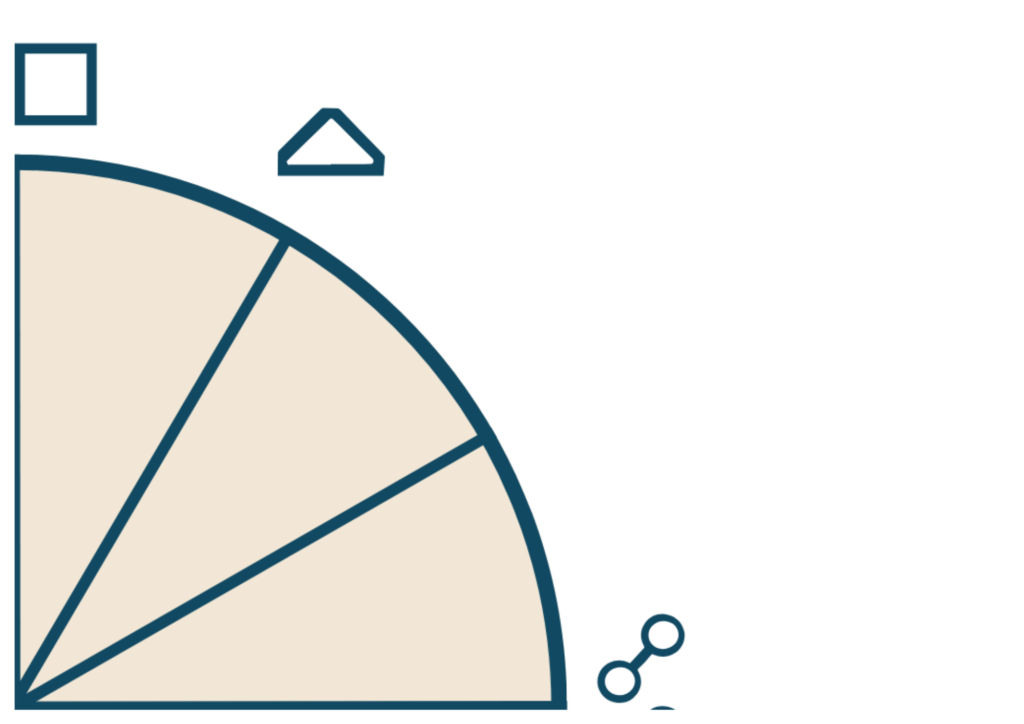
The third act happens from the opposition to the waning square and contains the waning trine.
The midpoint turns the hero around, from his upward journey toward success, which has been seemingly achieved, into a downward journey of understanding. From this point forward the hero must return home to gain the true meaning of his journey, just as in astrological terms we now must glimpse the meaning of the cycle.
Understanding and meaning-making comes with hard realizations and after the oppositon the hero usually faces a difficult period, a dark night of the soul, where he must grapple with his fears. This may come with the realization that the success of the midpoint might not have been too much of a success after all. A re-evaluation must take place and only after reaching the end of this dark tunnel and grappling with the losses and mistakes of the journey, does the waning trine reveal the journey’s higher meaning and give new hope.
With this new understanding the hero encounters the waning square, where a new decision must be made. This isn’t about how the hero wants to move into the adventure world, how we want to move into the cycle, but about how the hero wants to bring his journey to a close. The waning square is the true climax of the story, the final test of the hero of whether or not he has understood the true meaning of the cycle.
Fourth Act
Rewards and Regeneration
The third act happens from the waning square to the new conjunction and contains the waning sextile.
The climax is the final big decision that reveals how the hero understands the meaning of the cycle. From this point forward the hero returns home. All major fights have been fought and now it is time to truly internalize the lesson of the journey and to regenerate for the next. The hero doesn’t return to the old oridnary world he started out in, just like the hero, the old world has changed into something new, a new status quo from which the new cycle can then be started.
At the waning sextile the hero recevies the true reward of the journey, the one he thought he received at the midpoint. Moving forward from this point toward the new conjunction the hero internalizes all the lessons he has learnt into true wisdom, a new foundation for what is yet to come, but also has to let go off the things that no longer serve him so that he can enter the new cycle without old baggage weighing him down. And then, at the new conjunction, another cycle starts.